
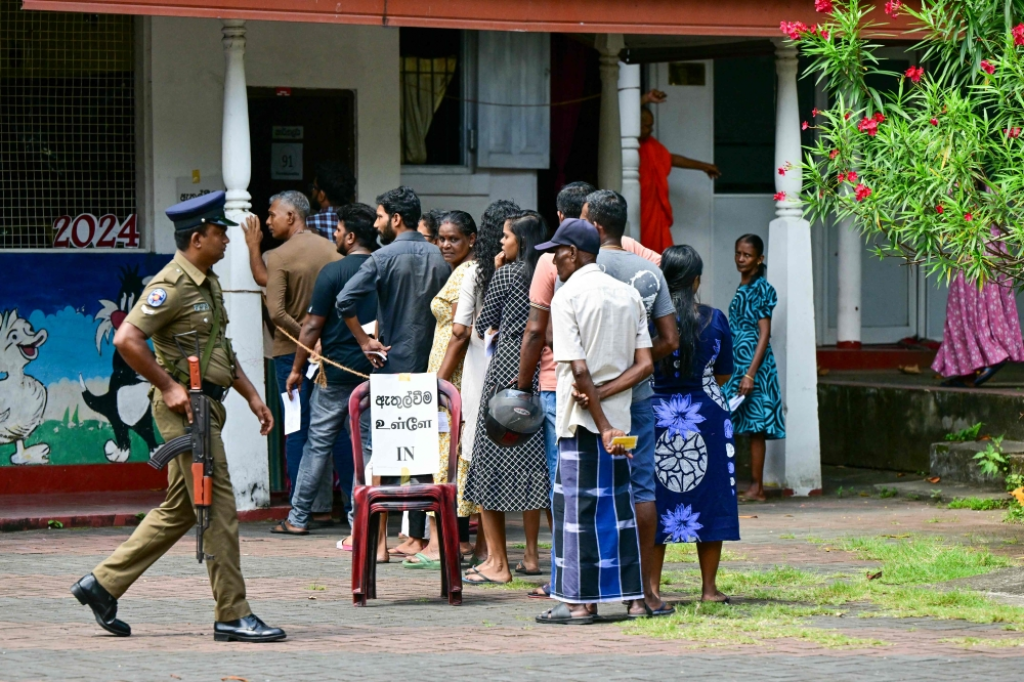
Cash-strapped Sri Lanka began voting for its next president on Saturday (Sep 21) in an effective referendum on an unpopular International Monetary Fund austerity plan enacted after the island nation's unprecedented financial crisis.
It is the country's first election since the downturn sparked mass protests in 2022 that ousted then-president Gotabaya Rajapaksa.
His successor Ranil Wickremesinghe is fighting an uphill battle for a fresh mandate to continue belt-tightening measures that stabilised the economy and ended months of food, fuel and medicine shortages.
His two years in office restored calm to the streets after civil unrest in 2022 saw thousands storm the compound of Rajapaksa, who promptly fled the country.
"I've taken this country out of bankruptcy," Wickremesinghe, 75, said after casting his ballot in the morning.
"I will now deliver Sri Lanka a developed economy, developed social system and developed political system."
But Wickremesinghe's tax hikes and other measures, imposed per the terms of a US$2.9 billion IMF bailout, have left millions struggling to make ends meet.
hE is tipped to lose to one of two formidable challengers. One is Anura Kumara Dissanayaka, the leader of a once-marginal Marxist party tarnished by its violent past.
The party led two failed uprisings in the 1970s and 1980s that left more than 80,000 people dead, and it won less than 4 per cent of the vote in the last parliamentary elections.
Fellow opposition leader Sajith Premadasa, 57, the son of a former president assassinated in 1993 during the country's decades-long civil war, is also expected to make a strong showing.
He vowed to fight endemic corruption, and both he and Dissanayaka have pledged to renegotiate the terms of the IMF rescue package.
"There is a significant number of voters trying to send a strong message ... that they are very disappointed with the way this country has been governed," Murtaza Jafferjee of think tank Advocata told AFP.
A total of 39 people are contesting the vote, including a 79-year-old candidate who remains on the ballot despite dying of a heart attack last month.
More than 17 million people are eligible to vote in the election, with more than 63,000 police deployed to protect polling booths and counting centres.
"We also have anti-riot squads on standby in case of any trouble, but so far everything is peaceful," police spokesman Nihal Talduwa said.
"In some areas, we have had to deploy police to ensure polling booths are safe from wild animals, especially wild elephants."
Dozens of people were lining up outside polling stations in Colombo before voting began.
Polls close at 4pm (10.30am GMT) with counting to begin on Saturday evening.
A result is expected on Sunday, but an official outcome could be delayed if the contest is close.
Schools were closed on Friday to be converted to polling stations, which will be staffed by more than 200,000 public servants deployed to conduct the vote.
 News
News  News
News  News
News  News
News