
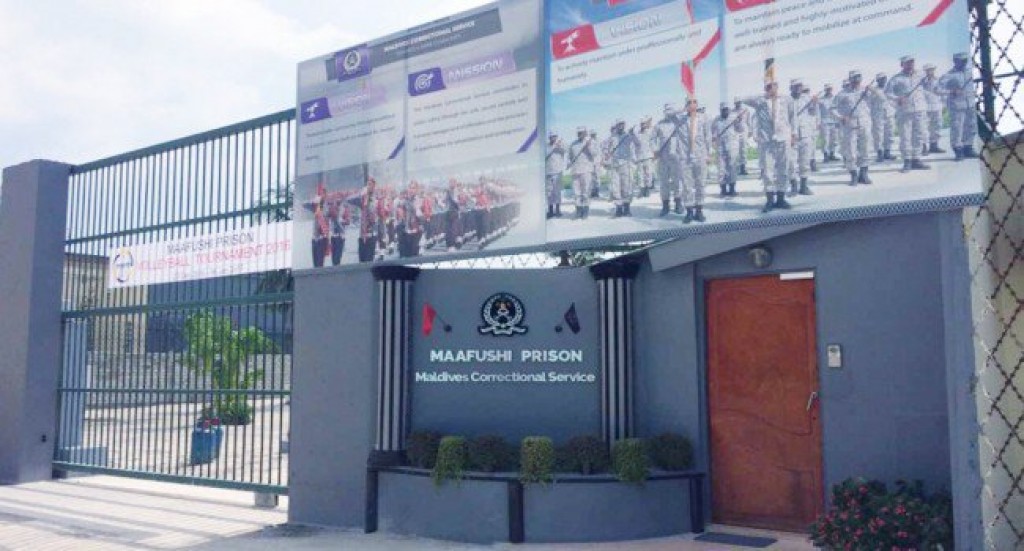
Transparency Maldives, together with Home Ministry has released a report citing that prison radicalisation is rampant in Maafushi Prison.
The report, published on Wednesday, noted the lack of effective rehabilitation programs for individuals who support terrorist ideologies. As such, extremists in Maafushi Prison are spreading their ideologies amongst other prisoners, the report cited.
"The radicalization of juveniles is also a particular concern", Transparency report stated.
The report cited that extremist groups are well organised within the prison and hold "a strict militant jihadist view of how shariah (Islamic law) and hukums (Islamic penalties for crimes) must be carried out in the Maldives".
The report also noted that there is "one overarching emir who leads all of the militant jihadists in the prison, and each prison unit also has its own emir" - and that a majority of the prisoners who followed this ideology believed the Administration to be a failed one for not adhering to their perception of Islam.
The radicalised prisoners are in contact with other militant groups and extremists outside of the Prison, according to the Transparency report. The report stated that these individuals carried mobile phones to contact other like-minded radicalised individuals - National Counter Terrorism Centre (NCTC) noted 36 such individuals outside of the Prison; some of whom are returnees from Syria.
The report also noted the challenges in the Prison to address the issue of radicalisation, drawing on the understaffed and overcrowded demeanour of the Prison. As such, the report noted that the Prison guards were unable to monitor the Prison effectively, leading to the spread of propaganda material within the Prison units.
The Transparency report recommended radicalised prisoners be segregated from the rest as soon as possible.
Home Ministry started a program in 2021 to assess the radicalised prisoners and segregate them in a new unit that can house a 100 prisoners.
 News
News  News
News  News
News  News
News