
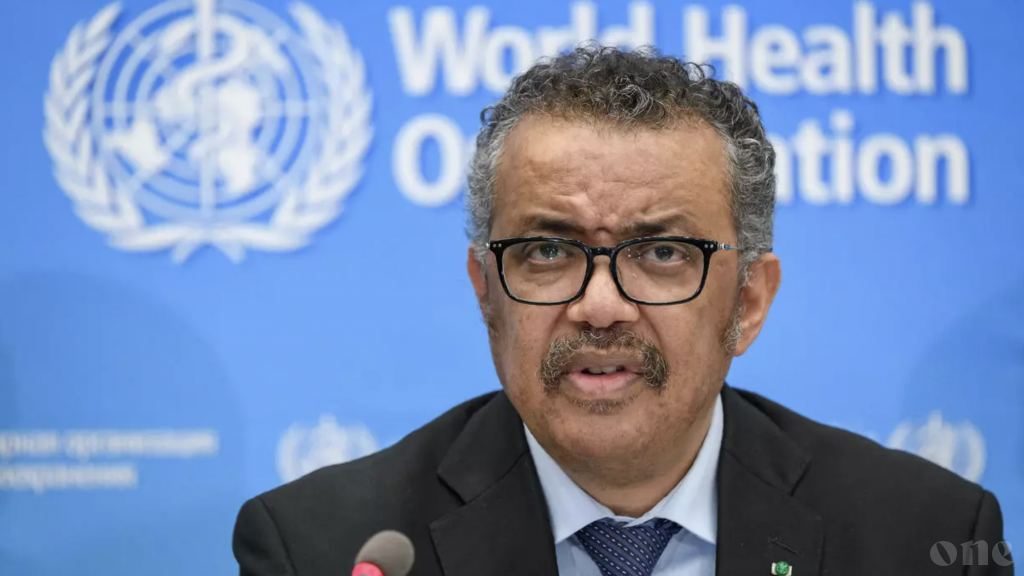
The World Health Organization declared COVID-19 a global pandemic on Wednesday as the new coronavirus, which was unknown to world health officials just three months ago, has rapidly spread to more than 121,000 people from Asia, to Europe, the Middle East and now parts of the United States.
“In the past two weeks the number of cases outside China has increased thirteenfold and the number of affected countries has tripled,” WHO Director-General Dr. Tedros Adhanom Ghebreyesus said at a press conference at the organization’s headquarters in Geneva. “In the days and weeks ahead, we expect to see the number of cases, the number of deaths and the number of affected countries to climb even higher.”
Tedros said several countries have demonstrated the ability to suppress and control the outbreak, scolding other world leaders for failing to act quickly enough or drastically enough to contain the spread.
“We’re deeply concerned both by the alarming levels of spread and severity, and by the alarming levels of inaction,” he said, just before declaring the pandemic.
“We have rung the alarm bell loud and clear,” Tedros said.
Cases in China and Korea have significantly declined, he said, adding that 81 countries don’t have any confirmed cases and 57 countries have 10 cases or less.
“We can not say this loudly enough or clearly enough or often enough, all countries can still change the course of this pandemic,” he said. “Some countries are struggling with a lack of capacity. Some countries are struggling with a lack of resources. Some countries are struggling with a lack of resolve.”
Declaring a pandemic is charged with major political and economic ramifications, global health experts say. It can further rattle already fragile world markets and lead to more stringent travel and trade restrictions. WHO officials have been reluctant up until now to categorize the virus as a global pandemic, which is generally defined as an illness that spreads far and wide throughout the world.
The last time the WHO declared a pandemic was during the H1N1 outbreak in 2009, which infected nearly a quarter of the world’s population. However, that decision was criticized for creating unnecessary panic. SARS was not considered a pandemic, despite affecting people in 26 countries, and neither was MERS.
 News
News  News
News  News
News  News
News