
 Hussain Ali
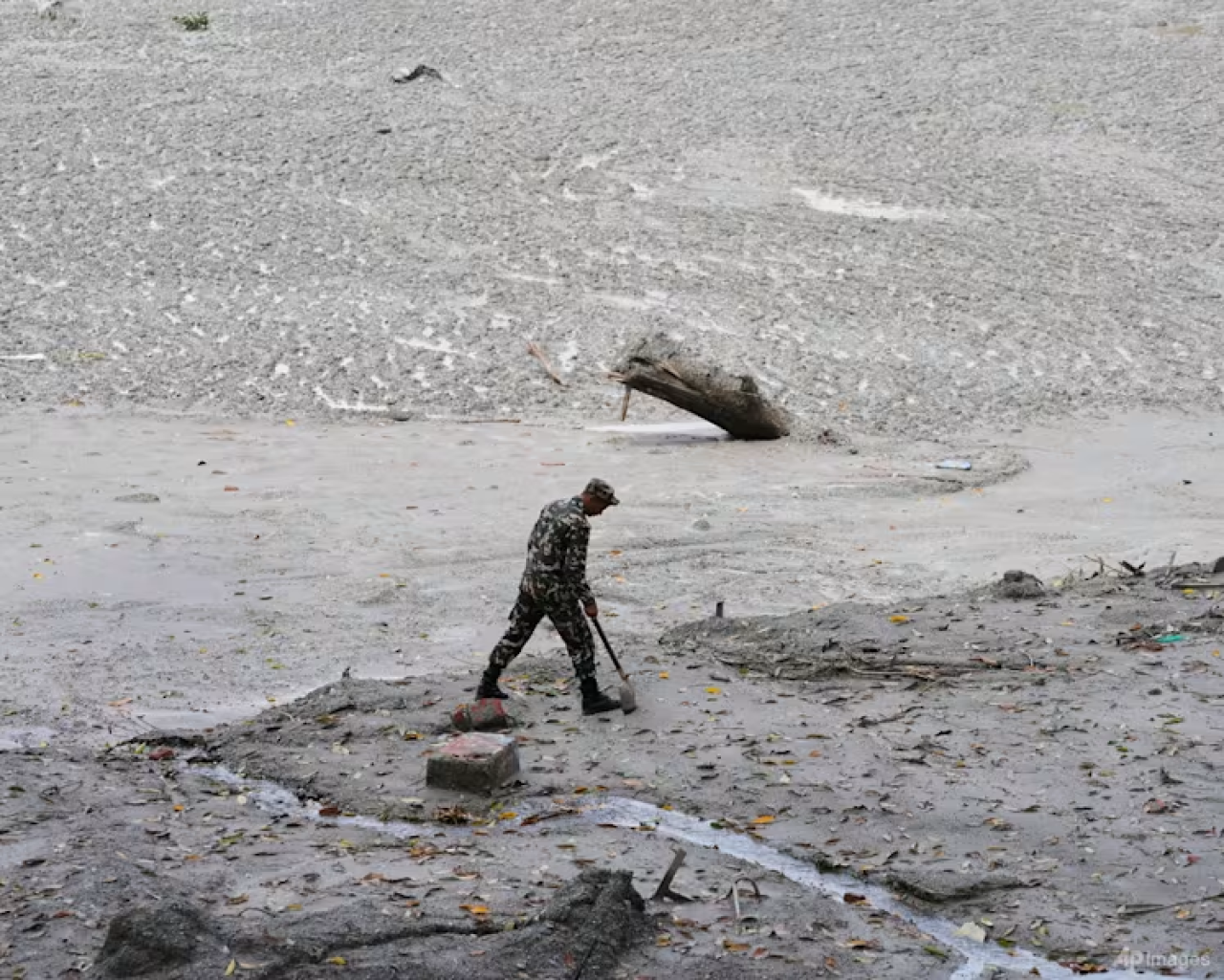
Wealthy nations must do their fair share to help countries that are least responsible for the climate crisis, yet bear its brunt, Nepal's foreign minister told AFP on Thursday (Sep 24).
The Himalayan nation suffered one of the worst catastrophes in its history late last month when a tsunami-like flood, triggered by a high-altitude glacial mountain collapse along the Nepal-China border, cut a swathe of destruction.
More than 1,400 people died, 6,000 are still missing, and the economic devastation runs in the billions of dollars.
"What we're trying to convey to the world is this: these issues of climate change are not theoretical anymore," Minister of Foreign Affairs Shisir Khanal said in an interview at Nepal's permanent mission, during the United Nations' high-level week.
"These are becoming real, and the frequency of such disasters are likely to happen more often over the next few years as the temperature rises, as the glaciers melt."
Scientists from the World Weather Attribution (WWA) have described the event as a "compound crisis" in which local geological instability combined with long-term warming that has led to glacier retreat and permafrost thaw.
Nepal has contributed negligibly to the breakdown of the global climate system, Khanal added.
More than 90 per cent of its electricity comes from hydropower, over 70 per cent of new cars sold are electric, and the nation contributes just 0.1 per cent of global greenhouse gases.
"So why should we, who have not had any contribution to this issue, only bear the burden?"
Rich countries should not only help when disaster strikes, he said, "but provide us with financing so that we can build resilient communities".
 Business
  Entertainment
  World
World  News
News