
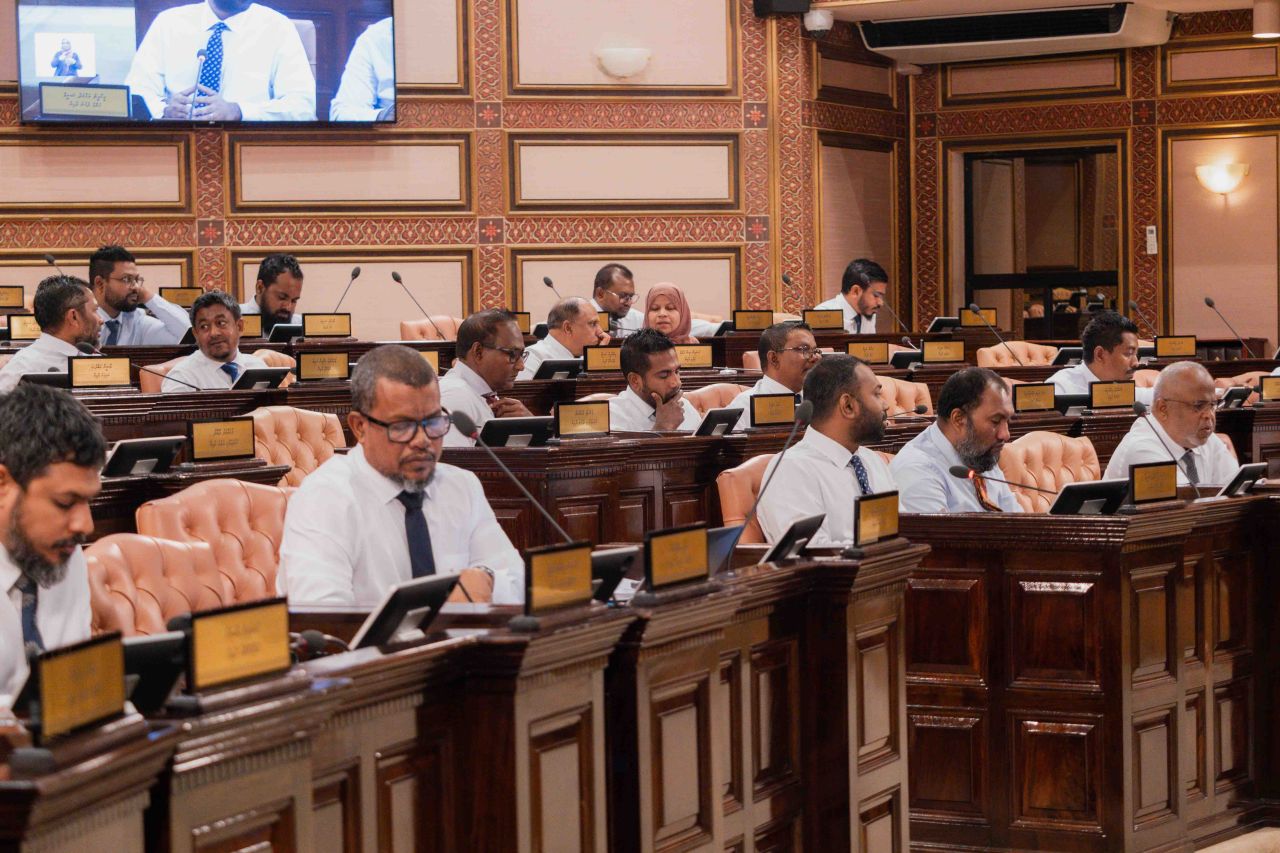
The Whole House Committee has passed a bill to amend the Special Economic Zone (SEZ) Act, paving the way for the development of sustainable townships across the Maldives.
The bill, submitted on behalf of the government by Baarah MP Ibrahim Shujau, aims to promote industrial, economic, social, financial, and infrastructural growth while enhancing investment opportunities and foreign exchange earnings. It also seeks to encourage the transfer of knowledge, skills, and technology to the Maldives.
Key amendments include the addition of new articles after Articles 9, 17, 20(a), and 22, along with a new chapter after Article 70. Changes have also been proposed to Article 10(b), particularly clauses 1 and 12 of the Act.
The bill outlines several criteria for the establishment of sustainable townships within SEZs. These include a minimum investment of USD 500 million and the development of integrated tourism projects offering luxury services. Developers are also required to include large-scale real estate projects, international-level hospitality and health service centres, and educational, healthcare, and recreational facilities.
A major focus of the bill is environmental sustainability. It mandates that at least 60 percent of the energy used in such zones must come from renewable sources. Additionally, it encourages sustainable agriculture and aquaculture to boost local food production and reduce dependency on imports.
The bill also proposes a special rate for property transfer tax on long-term lease transactions involving villas or rooms in the zone. Developers will benefit from significant tax incentives, including exemptions from income tax and import duties for goods used in zone development.
Business income within the zone will be taxed at a reduced rate of 5 percent for the first 10 years, 10 percent for the following decade, and thereafter at the rate stipulated by law.
The Committee of the Whole House passed the bill with 55 votes in favour out of 65 members present. Nine MPs representing the Maldivian Democratic Party (MDP) voted against the bill.
If enacted, the amendments are expected to attract large-scale investments and promote sustainable urban growth, aligning with the government’s long-term vision for diversified and environmentally responsible economic development.
 News
News  News
News  News
News  News
News