
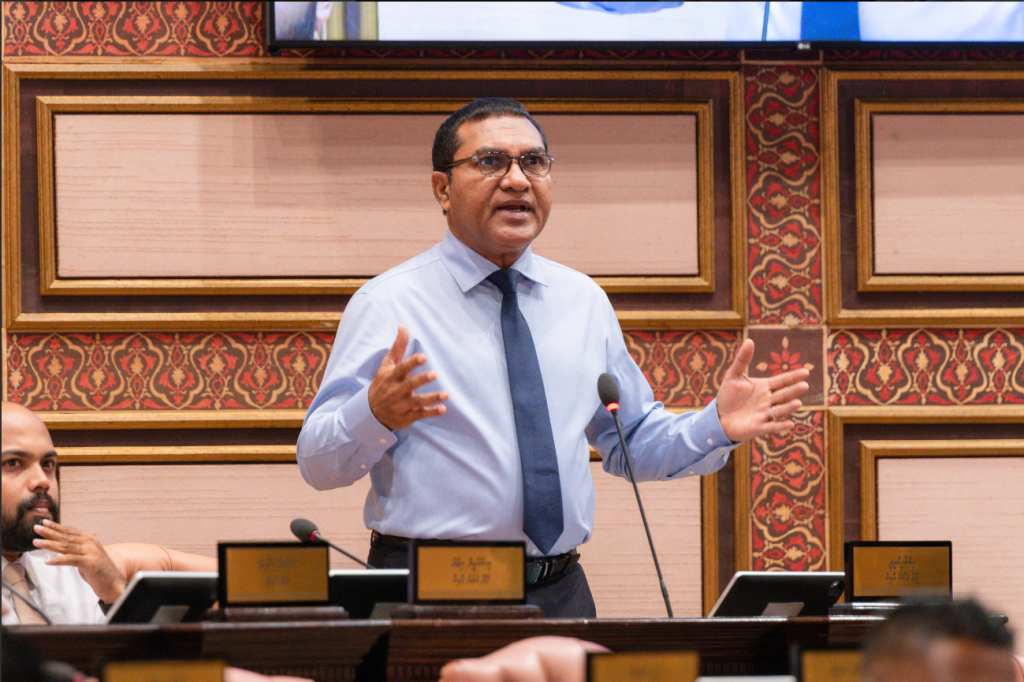
The Government has submitted a bill to the Parliament to regulate live organ transplants, to enhance healthcare services across the Maldives.
The bill, submitted on Sunday by South Feydhoo MP Ibrahim Didi on behalf of the Government, seeks to establish a comprehensive legal framework for organ transplantation. It defines the rights and responsibilities of service providers and recipients, and sets out the ethical and procedural standards to be observed when conducting such operations.
Under the proposed legislation, only live donor organ transplants will be permitted. Donations will be limited to organs or tissues that have paired structures or regenerative capacity, meaning they can continue to function even after partial removal. The bill explicitly prohibits the transplantation of reproductive organs such as ovaries and testicles.
The legislation also specifies clear eligibility criteria for donors. A donor must be a Maldivian national aged 18 or above, mentally competent, and voluntarily willing to donate. Donations from individuals in state custody or serving prison sentences will not be permitted.
To ensure proper oversight, the bill calls for the creation of two governing bodies – the Transplant Council and the Transplant Authorisation Committee. The Transplant Council will be tasked with advising on regulations, issuing and revoking permits, ensuring compliance, and verifying that medical facilities meet the required standards. The Transplant Authorisation Committee will oversee transplant approvals, working alongside clinical and ethics committees established at each hospital.
The bill also introduces strict penalties for violations, making it a criminal offence to conduct transplants or related activities without proper consent or authorisation. Offenders may face substantial fines, while certain offences carry prison sentences of up to one year.
 News
News  News
News  News
News  News
News