
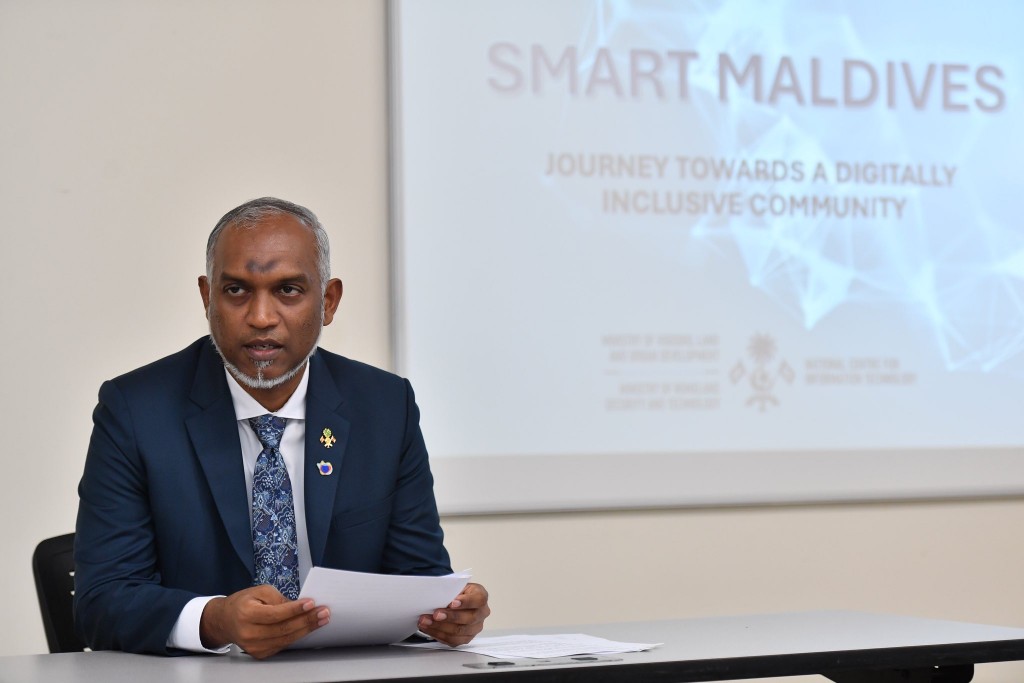
President Dr. Mohamed Muizzu has stated that financial architecture reforms and avenues for partnerships for Small Island Developing States (SIDS) are needed to enable easier access to finance to reach the Sustainable Development Goals (SDGs).
He made the remarks during his keynote address at the High-Level Meeting on Resource Mobilization for SIDS at the Fourth International Conference on SIDS (SID4) held in Antigua and Barbuda on Tuesday.
President Dr. Muizzu noted that numerous SIDS, including the Maldives, that have graduated from the Least Developed Countries (LDC) category pay a hefty price tag, considering the increase in the cost of borrowing from bilateral creditors and restrictions on access to affordable finance.
He expressed concern over the declining trajectory of the net external resource inflow to SIDS over the past two decades despite commitments made by the international community to augment development and climate financing for SIDS. He added that SIDS should not have to make impossible choices, such as deciding between funding the establishment of a new school and constructing seawalls.
In his address, President Dr. Muizzu called upon Multilateral Development Banks (MDBs) and international financial institutions (IFIs) to help enact reforms such as channelling funds through international capital markets given their positive credit ratings and, in turn, lend to SIDS at highly concessional rates and fulfil the promises made to SIDS in the last three decades.
He also proposed that the development partners of SIDS partner with the MDBs and the private sector to scale up private finance flows to SIDS. The President also urged SIDS to broaden their vision and aim higher by identifying goals and seeking assistance and support from development partners.
Additionally, President Dr. Muizzu challenged the commitment and will to direct finance towards where and who needs it the most and urged development partners to stop viewing SIDS as mere recipients of aid and instead view us as partners in sustainable development.
 News
News  News
News  News
News  News
News