

Attorney General Ahmed Usham has stated that he will prioritise national interest when giving legal advice to President Dr Mohamed Muizzu.
The Supreme Court on Thursday ruled that it was illegal to consider the quorum in the Parliament without including the vacant seats.
Speaking at a meeting with the people of Kendhikulhudhoo island as part of the President's visit to the islands of N. Atoll, the President said that the amendment to the rules of the Parliament to determine the quorum of the total number of members of the Parliament and the quorum of the sittings was unconstitutional. The legality of the later bill is questionable and the government will seek the Attorney General's opinion on the matter, he said.
In a post on X, Usham said it was not right for the legislative and judiciary to have conflicts.
"All parties should take decisions in accordance with the Constitution and laws and put the interests of the country and its people first. I will also look at these aspects while giving legal advice to the president," Usham said.
Usham said that from day one, the rule of law was that the total number of members in parliament was 80 and it was against the constitution.
A five-judge constitution bench of the Supreme Court, which heard the constitutional case, ruled that counting the total number of members of parliament without including the constituencies of the members who have resigned from the membership of parliament is the rule of number of MPs under Article 71 of the Constitution, the representation of constituencies under Article 72, and the right to participate in the administration of the affairs of the people through a representative under Article 26(c). Section 4 is held to be violative of the authority of the people.
It was also held that the total number of members of parliament mentioned in the Constitution, excluding vacant seats, was interpreted by the Parliament as applicable to 18 articles of the Constitution. Article 49(a) (a) and (d) of the Constitution, passed by parliament and added to the rules of parliament, are in accordance with Article 286 of the Constitution. Although it was a decision, it was held that since the letters were now rejected by the Parliament, there was no further action that the court could take against them.
A five-judge constitution bench headed by Justice Azmiralda Zahir, followed by Justice Aisha Shujoon Mohamed, Justice Mahaz Ali Zahir, Justice Husnu Suood and Justice Dr Mohamed Ibrahim ruled on this issue.
 News
News  News
News 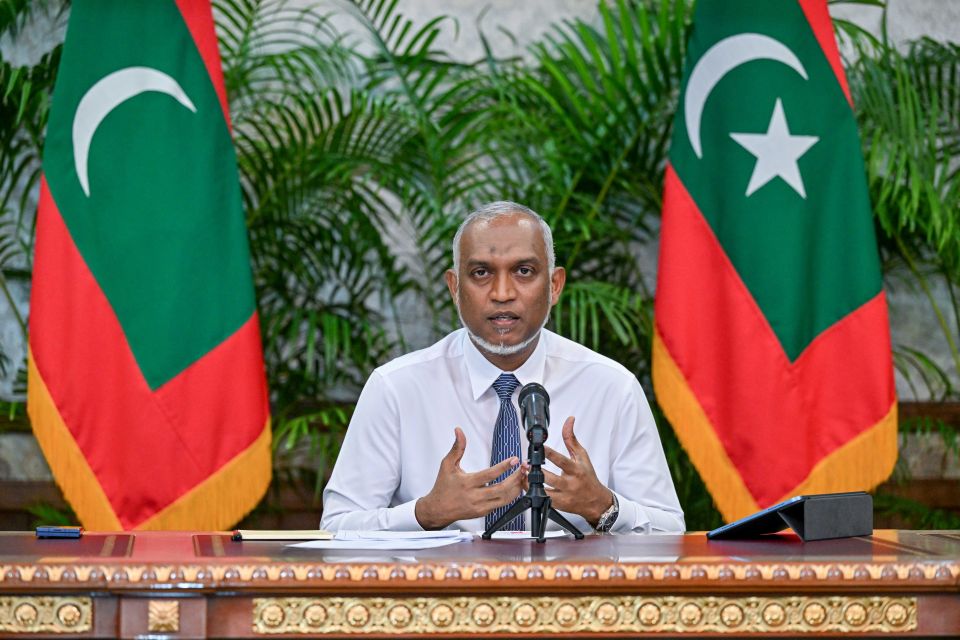 News
News  News
News