
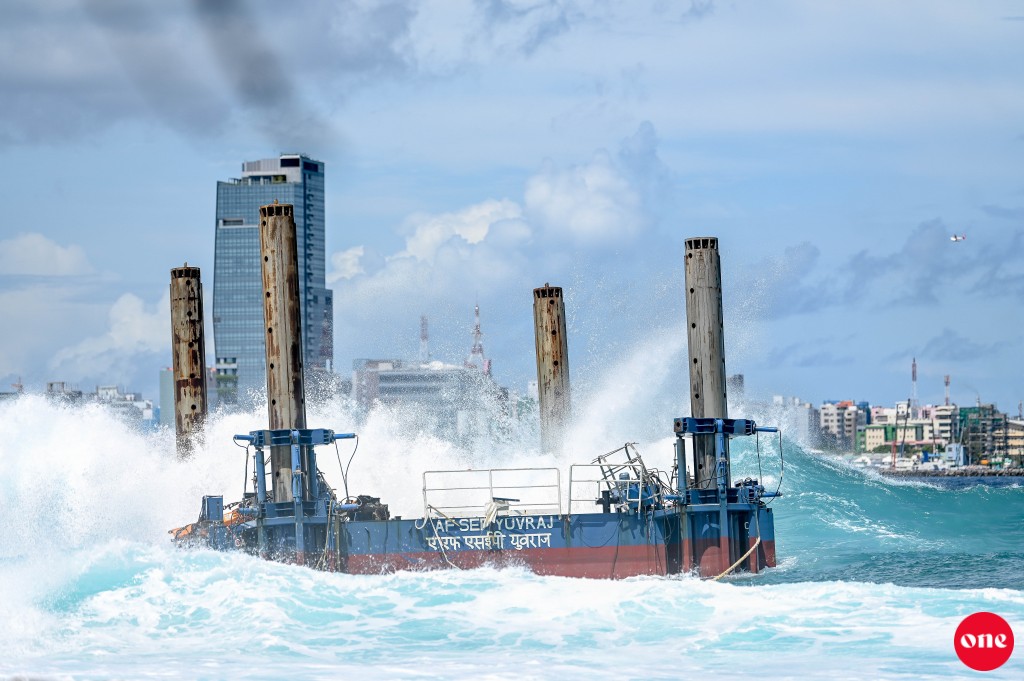
The Civil Court yesterday ruled that Afcons Infratstructure could not defer a fine of MVR 69 million for damage caused to the Villimale reef during the construction of the Thilamale Bridge.
A Self-Elevating Platgorm (SEP) which was used for the construction of the Thillamale' Bridge, ran aground at 0245hrs on August 16 last yea causing extensive damage to the reef.
Following the incident, on 13 November 2022, EPA imposed a fine of MVR 69 million on Afcons for damages to the reef. However, instead of paying the fine, Afcons appealed EPA's decision at Environment Ministry.
After investigating the issue, the Environment Ministry concluded that there was no need to change the EPA's penalty.
Afcons had then lodged a case at the Civl Court agains the Environment Ministry.
Afcons asked the court to issue an interim order. The order sought to stay the execution of the Ministry’s fine, pending a judicial review or a negotiated settlement, as well as revising the MVR 69 million fine.
They said that the damage by the platform was not caused by their negligence. It is due to (large waves) beyond the control of the company. The EPA report also stated that the incident was caused by the waves.
The EIA report for the Thilamale bridge work noted that the project would cause damage to the reef and therefore the damage caused by the platform collapse was previously accepted by the EPA, Afcons said. The EPA's assessment report did not state that the platform went ashore due to the negligence of Afcons.
The interim order sought by Afcons is an interim order without filing a lawsuit. The interim order was requested under the Civil Procedure Act. Afcons also requested an order in the absence of the respondent.
However, Afcons did not state any reason for issuing an interim order in absentia. The Civil Court therefore gave the Environment Ministry the opportunity to respond to the lawsuit.
Judge Zulaiha Sheeza, who heard the case, in her opinion, said she knew that the interim order sought in favor of the Afcons was granted by the court as a means of providing interim remedy or temporary protection before the court decides on a suit pending before the court.
Factors to be taken into account in issuing an interim order include the fact that the person seeking the interim order has a clearly established likelihood of having a subject right or legal right that requires legal protection. There is also a risk that the original subject matter proceedings will be delayed without the issuance of an interim order and the person seeking the interim order must be legally entitled to seek such an order.
The judge said the fine could prevent Afcons from getting projects in the future and would deprive it of the opportunity to participate in tenders and affect the company's reputation. The judge said the damage to the company's reputation could not be recovered. Therefore, if an interim order is not issued, Afcons may suffer irreparable damage.
The judge said the EPA's fine would damage Afcons' reputation, but the company had not identified any other factors to support it. The judge also noted that the company would suffer financial losses but did not provide details. The judge also said that Afcons could not give detailed reasons for issuing an interim order before filing a case against the Environment Ministry.
Therefore, the judgment said that the EPA's fine of MVR 69,411,800 million could not be postponed.
 News
News  News
News  News
News  News
News