

 Hussain Ali
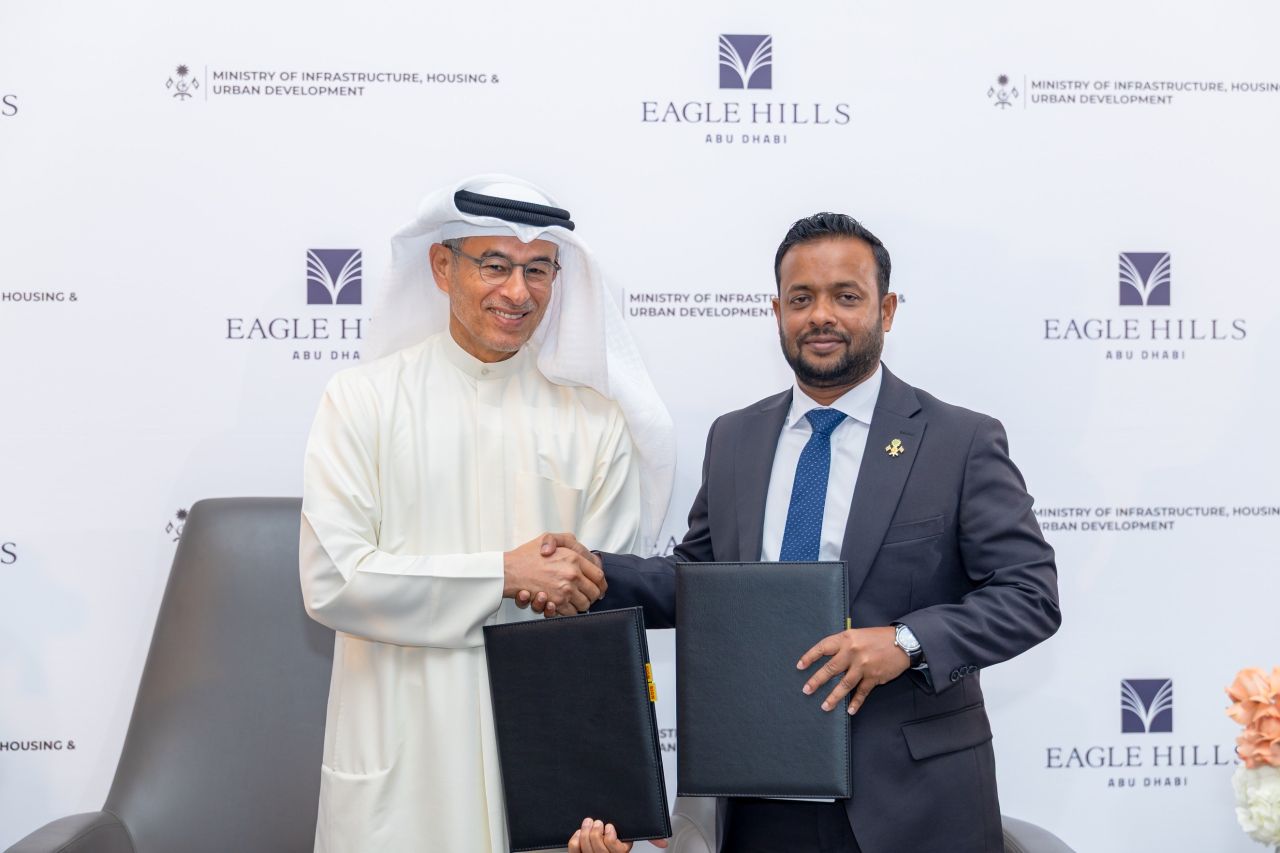
Housing Minister Dr. Abdulla Muththalib has provided detailed responses to questions raised by the public regarding the massive USD 20 billion development project planned by UAE's Eagle Hills in Rasmalé.
The agreement between the Maldivian government and Eagle Hills to develop a modern marina and a world-class waterfront city in Rasmalé was signed on Monday in Abu Dhabi. Emaar founder Mohamed Alabbar, known for building projects like the Burj Khalifa and Dubai Mall, said that day that it was a great joy and honor to become a development partner in a uniquely breathtaking country like the Maldives.
As many individuals raised numerous questions regarding the project, the Minister published a very detailed response addressing those inquiries on LinkedIn.
The Minister stated that while the Rasmalé project stands as the largest foreign investment project in Maldivian history and has faced various criticisms and concerns, many of the questions raised by different parties are genuine, and he wanted to provide direct answers to them.
According to Muththalib, the government is not relying on a check received on the day of signing for this project; instead, it relies on the revenue that will be gained by the state, which includes TGST collected from every hotel, dining venue, shop, and service within the development without any exemptions, just like the taxes paid by any resort, a 10 percent share of the master developer's revenue, and 4 percent from every property transaction.
The Minister noted that all funds from every sale under this project will be kept in a local escrow account in the Maldives, making it a very important and beneficial arrangement.
"As a country that has experienced long-term difficulties in obtaining dollars, this is a very big deal. And I note that this is in addition to the dollar revenue the government will receive through this project," Muththalib said.
The Minister stated that by the time the project is fully completed, it is estimated that at least one million tourists will visit annually. While expecting the state to generate over USD 11 billion in revenue during the development period, more than 54,000 jobs will be created within the economy, the Minister added.
"The government is not taking any loans, does not have to provide a sovereign guarantee, and is not granting any tax concessions. In addition to these, all project funds will circulate through Maldivian banks," the Minister said.
The Minister stated that employees working in resorts have to live away from their families for most of the year. However, since Rasmalé is located just a 17-minute speedboat ride from Malé, the jobs created by the hotels, marina, schools, and clinics established there will allow Maldivians living in Rasmalé or the Malé region to finish work, return home every day, and spend time with their families.
Muththalib also responded to a recent question raised by former President Abdulla Yameen, who suggested that carrying out housing projects in Hulhumalé would be much better than Rasmalé. The Minister stated that building 5,000 three-room apartments in Hulhumalé would cost between USD 400 million and USD 500 million.
"Since we agreed to a 10 percent revenue share instead of an acquisition cost without spending any money from the government budget, or going into any debt or sovereign guarantee, the cost of these homes is offset by what is received from the government's revenue share," the Minister said.
Minister Muththalib pointed out that 500 hectares, which is half of Rasmalé, has been designated exclusively for Maldivians, and a land size of this scale can provide housing for a population of 150,000 or even more.
However, the Minister also noted that such a large city must have jobs and services readily accessible.
Some people question what will happen to the country's sovereignty when property is sold to foreigners, and the Minister stated that this will not bring about any changes.
"There will be no transfer of ownership or freehold whatsoever here. Just as Maldivian laws and regulations apply in every resort in the Maldives today, at all times during this project and in every place of development, Maldivian law will apply. Property in Rasmalé can only be purchased by parties authorized by the government. The government will have full authority to grant or deny visas. Acquiring property will not provide any pathway to permanent residency or citizenship, and there will be no such pathway in the future either," the Minister said.
The Minister stated that if the government revokes a person's visa, that individual will have to leave the country. Furthermore, they cannot take their owned property with them in their luggage; those items will remain on this land, subject to being sold to another authorized party under Maldivian law, the Minister said.
Minister Muththalib stated that the Rasmalé agreement will provide the capital needed to build a modern city in the Maldives and strengthen the tax revenue the state receives to provide good services and opportunities to Maldivians.
Muththalib stated that unless the economy is diversified and revenues are increased, managing state expenditures and reducing debt will remain difficult for this or any future government, and a responsible government must change this course for the sake of future generations.
He also stated that the state must generate additional revenue, well-paying jobs, and business opportunities for Maldivians.
"Dubai and Singapore did not reach where they are today from money collected on the day of signing. Those countries reached that point due to the economic activities sparked by those investments. From the taxes collected year after year from businesses, visitors, enterprises, jobs, and all those things. That is the model we have discussed: a long-term, sustainable model where economic and social benefits compound," the Minister said.
Muththalib stated that Eagle Hills and Mohamed Alabbar, who have implemented projects in Downtown Dubai, Belgrade Waterfront, and across three continents, have clearly proven they have the full capability and experience to deliver this. Alabbar, one of the most prominent figures in the global real estate sector, has given his assurance that this will be done, he added.
 World
World  World
World  News
News 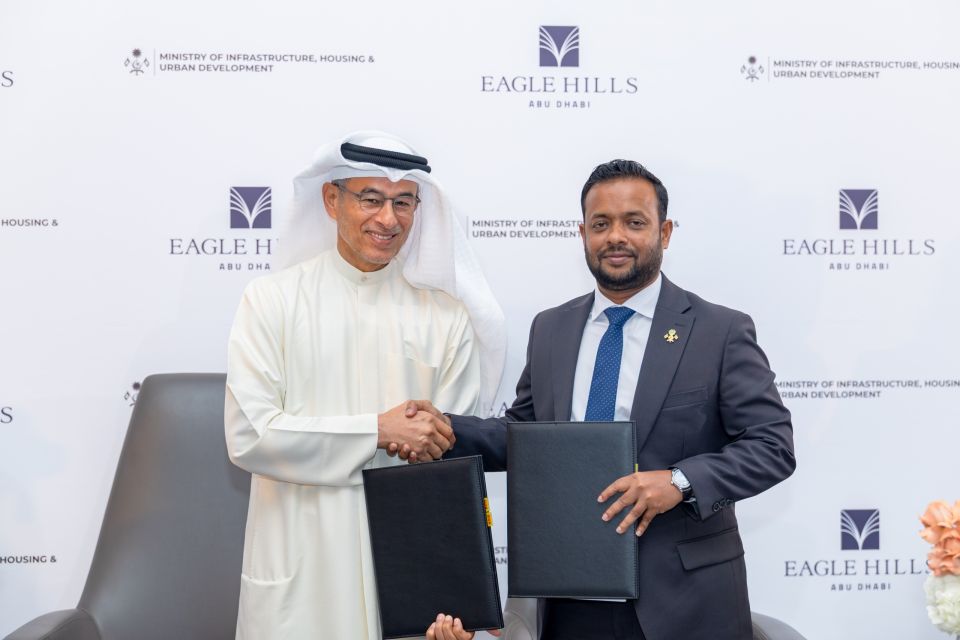 News
News 
ކޮމެންޓް