
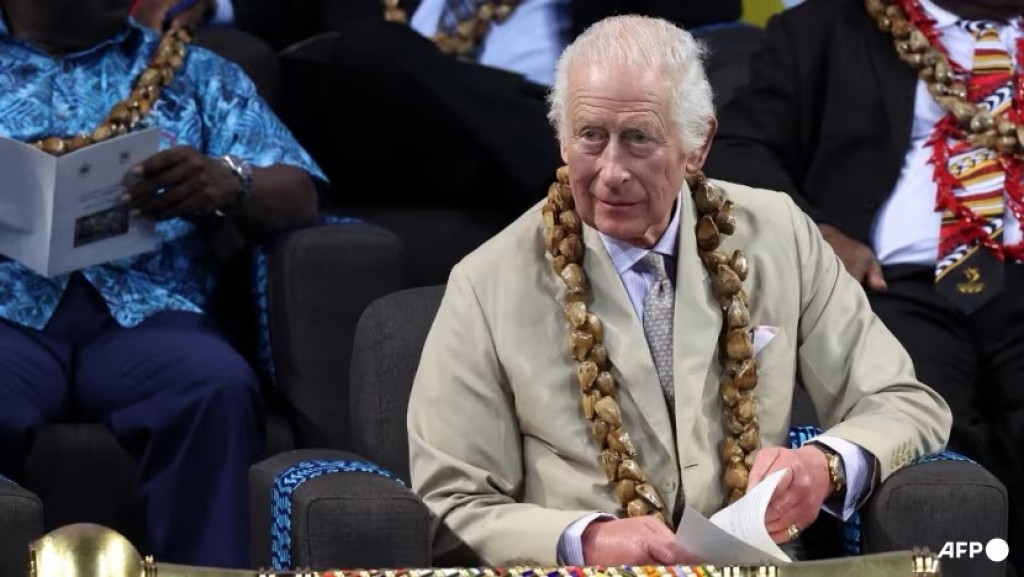
King Charles on Friday urged the Commonwealth to confront its "painful" history, as African and Caribbean nations continue their calls for reparations for Britain’s involvement in the transatlantic slave trade.
This message came as representatives from 56 Commonwealth nations, many with historical ties to the British Empire, gathered for the Commonwealth Heads of Government Meeting in Samoa. The summit, which began on Monday, has focused on pressing global issues, with historical accountability for slavery and climate change taking center stage.
In his address to the summit, King Charles acknowledged the enduring impact of the past on current generations. "I understand from listening to people across the Commonwealth how the most painful aspects of our past continue to resonate," he said. "It is vital, therefore, that we understand our history, to guide us towards making the right choices in the future."
The call for reparations from former colonial powers like Britain has gained traction globally, particularly within the Caribbean Community (CARICOM) and the African Union, where leaders argue that slavery's legacy has contributed to persistent racial and economic inequality. Some opponents of reparations maintain that contemporary societies should not be held accountable for historical injustices, while advocates insist that reparations could address ongoing disparities rooted in slavery.
British Prime Minister Keir Starmer recently stated he would not issue an apology for Britain’s historical role in the slave trade, nor support financial reparations, but said he was open to discussions with leaders. According to The Guardian, Starmer has reportedly shown willingness to consider non-financial reparations, such as restructuring global financial institutions and offering debt relief.
Several types of reparations have been proposed globally, including direct financial payments, official apologies, technology transfers, and educational programs. CARICOM has developed its own reparations plan, aiming to address the socio-economic impacts of colonialism in the Caribbean.
Bahamas Foreign Minister Frederick Mitchell confirmed that the summit’s draft conclusion, expected on Saturday, includes provisions for discussions on reparations. Jacqueline McKenzie, a lawyer with Leigh Day in London who is exploring legal claims for reparations, emphasized the importance of keeping the dialogue open. "If we say we want greater equality and equity in the world, the way to do this is to examine what and how reparations might manifest, rather than to shut down the conversation," she said.
The summit marks a key moment in the Commonwealth’s approach to historical accountability, as members push for meaningful action to address legacies of inequality and to support sustainable development across nations.
 World
World  World
World  World
World  World
World