
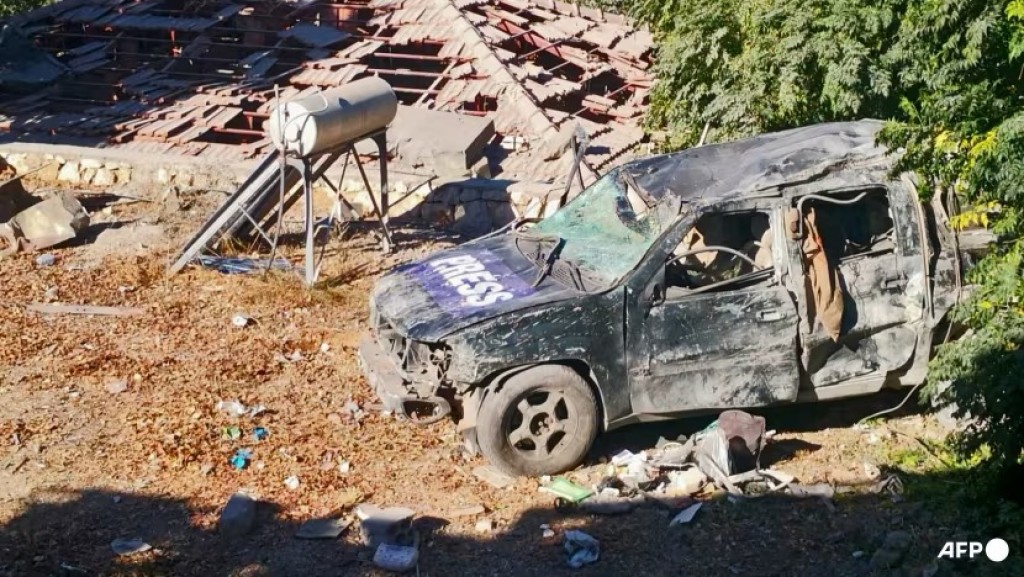
On Friday, October 25, three journalists were killed in southern Lebanon following an Israeli air strike. Lebanon’s Minister of Information, Ziad Makary, condemned the attack as a “war crime,” claiming it was a targeted strike on a residence in Hasbaya where several journalists were staying.
The incident occurred in an area not typically associated with Hezbollah strongholds, marking a significant escalation in the ongoing hostilities between Israel and Hezbollah, the Lebanese militant and political group backed by Iran. This recent wave of violence followed Israel's expanded military focus on Lebanon, which began last month. As part of its campaign, the Israeli military has struck hundreds of targets within Lebanon in what it describes as an effort to maintain border security amid increased tensions in the region.
Lebanon’s pro-Iran television channel Al Mayadeen reported that a cameraman and a broadcast engineer were among those killed in the attack. The Lebanese Al-Manar television network, run by Hezbollah, also reported that one of its video journalists had lost their life in the strike. Information Minister Makary, in a post on social media platform X, described the air strike as a “betrayal,” saying the journalists were attacked during a nighttime break and describing the strike as a premeditated act, noting that 18 journalists representing seven media outlets were present in the vicinity at the time.
Journalists from other media organizations, including Al-Jadeed, Sky News Arabic, and Al Jazeera English, were also in the area, though not all were injured in the attack. Lebanon’s health ministry has reported three other people were wounded.
The deaths have sparked international concern for media safety in conflict zones and have raised questions about the targeting practices of the Israeli military. International standards hold that journalists are civilians and are protected from direct targeting under the Geneva Conventions, which govern conduct in war. The Lebanese government’s classification of the attack as a “war crime” could potentially escalate the response from international organizations and governments.
 World
World  World
World  World
World  World
World