
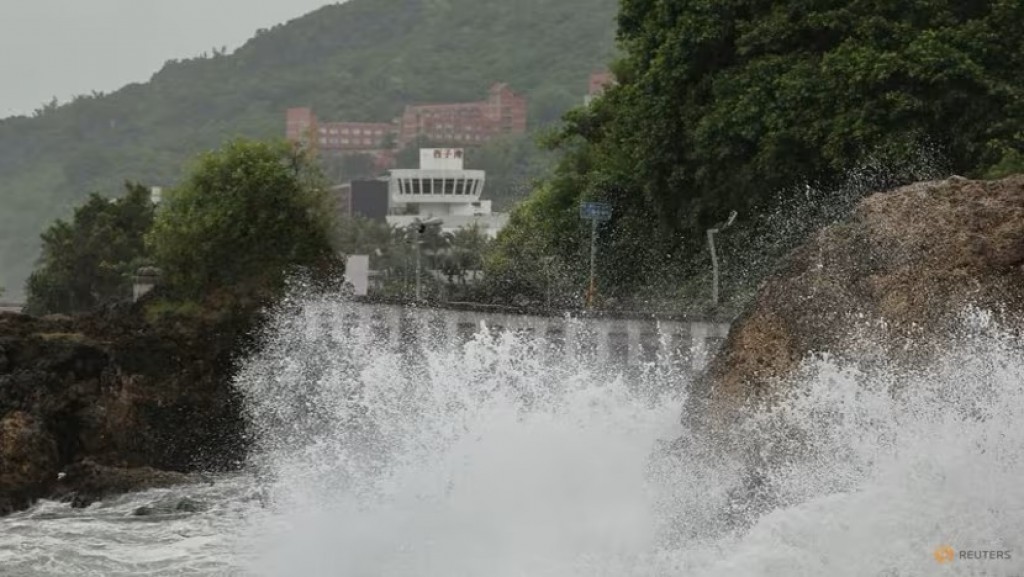
Taiwan shut down schools and suspended its financial markets on Wednesday as Typhoon Krathon unleashed heavy rains and strong winds across the southern and eastern regions of the island, ahead of its anticipated landfall.
The storm, with sustained wind speeds of 173 km/h and gusts reaching up to 209 km/h, was located 140 km southwest of Kaohsiung by 10 a.m. local time (0200 GMT), according to the Central Weather Administration (CWA).
Krathon, which had been downgraded overnight from a "strong" to a "medium" typhoon based on Taiwan's classification system, is now expected to make landfall near Kaohsiung or Tainan on Thursday morning, a day later than initially predicted, the CWA reported.
“This typhoon is moving very slowly, causing its landfall time to be repeatedly delayed. The latest forecast suggests the storm's center will reach land around 10 a.m. tomorrow,” said CWA chief Cheng Chia-ping.
Cheng also noted that the typhoon would weaken quickly after making landfall, likely downgrading to a tropical depression by Thursday morning and dissipating over Taiwan's landmass.
In response to the typhoon, offices and schools across the island were closed, and over 10,000 people were evacuated from high-risk areas as a precautionary measure, the interior ministry said.
On Tuesday, President Lai Ching-te warned of the potential for "catastrophic damage" from the typhoon and urged the public to remain highly alert, noting the storm’s unusual path, which is expected to take it off Taiwan’s east coast after landfall.
All domestic flights and ferry services were canceled on Wednesday, with around 250 international flights also suspended.
The defense ministry reported that nearly 40,000 troops were on standby to assist with relief efforts. As of Wednesday, authorities had recorded 46 injuries related to the typhoon, while one person in western Yunlin County was reported missing after falling into the sea.
Typhoons are common in the region during this time of year, but a recent study highlighted that these storms are increasingly forming closer to coastlines, intensifying faster, and lasting longer over land due to the effects of climate change.
 World
World  World
World  World
World  World
World