
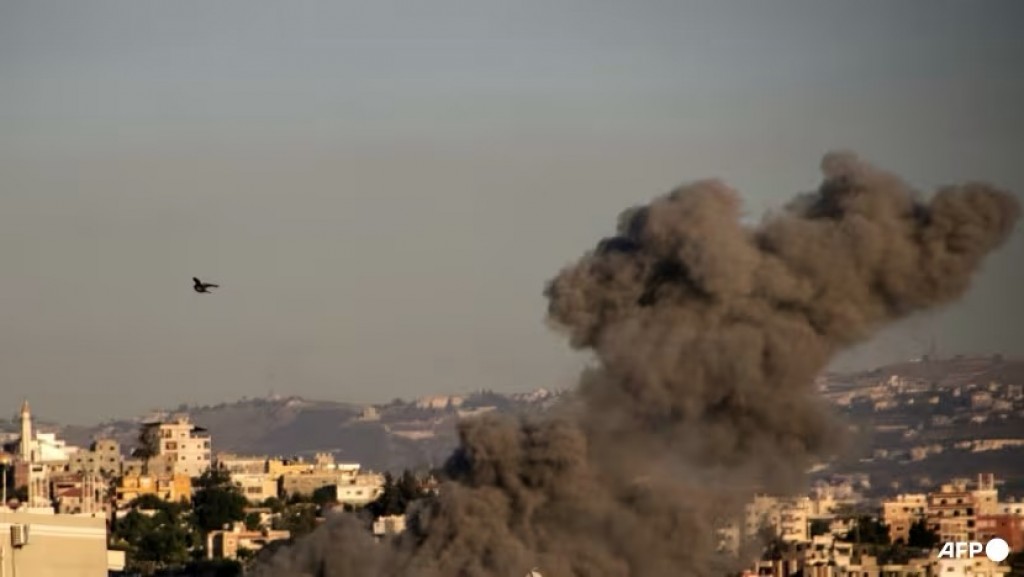
Israel has rejected calls from its allies for a 21-day ceasefire in Lebanon, pledging to continue its fight against Hezbollah militants "until victory," ahead of Prime Minister Benjamin Netanyahu's scheduled address to the UN General Assembly on Friday.
Israeli airstrikes targeting Iran-backed Hezbollah strongholds in Lebanon have resulted in hundreds of deaths this week, with Hezbollah retaliating through rocket attacks.
The United States, France, and other allies introduced a 21-day truce proposal on Wednesday, following a meeting between President Joe Biden and French President Emmanuel Macron on the sidelines of the UN General Assembly in New York.
However, Israeli Prime Minister Netanyahu rejected the ceasefire offer on Thursday, instructing the military to continue its operations with "full force."
The White House expressed disappointment with Israel’s decision, noting that considerable effort had gone into crafting the truce proposal.
"We wouldn’t have made that statement or worked on it if we didn’t believe that our conversations with Israel indicated support for the goal," National Security spokesperson John Kirby said on Thursday.
French President Macron criticized Netanyahu's decision, calling it "a mistake" and warning that Netanyahu must "take responsibility" for any regional escalation. Speaking during his visit to Canada, where he met with Prime Minister Justin Trudeau—who also supported the ceasefire—Macron emphasized that the truce plan had been discussed with Netanyahu directly.
The joint ceasefire statement warned that the situation in Lebanon had become "intolerable" and was in the interest of neither Israel nor Lebanon.
Lebanon's health ministry reported late Thursday that Israeli airstrikes had killed 92 people and injured 153 in the past 24 hours. More than 1,500 people have died since hostilities between Israel and Hezbollah reignited in October, with over 700 deaths from Israeli strikes since Monday alone.
The International Organization for Migration estimates that around 118,000 people have been displaced due to the ongoing conflict in Lebanon over the past week.
US Secretary of State Antony Blinken met with Israel's strategic affairs minister in New York on Thursday, emphasizing that a ceasefire would allow civilians on both sides to return home. "Further escalation will only make that objective more difficult," his spokesperson Matthew Miller said.
Meanwhile, Israel's defense ministry announced that it had secured a new USD 8.7 billion aid package from the United States to support its military efforts, underscoring Washington's reluctance to use military aid as leverage for a ceasefire.
 World
World  World
World  World
World  World
World