
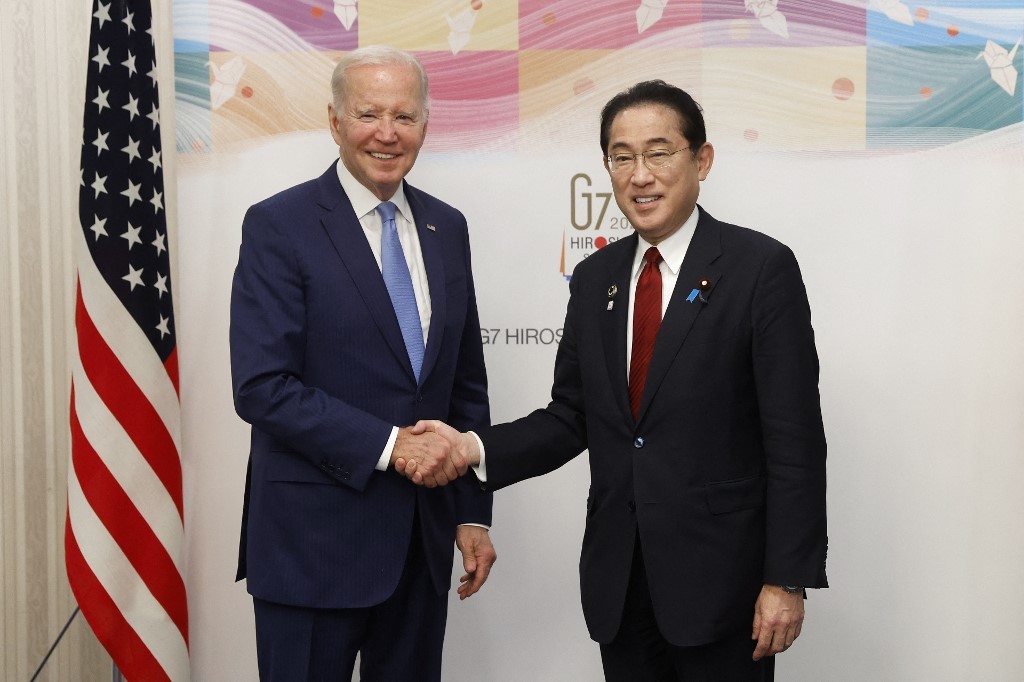
The United States and its G7 allies rolled out new sanctions against Russia's "war machine" on Friday (May 19), targeting Moscow's lucrative diamond trade and more entities linked to the invasion of Ukraine.
Leaders from the Group of Seven wealthy democracies are meeting in Hiroshima, Japan, with Russia's US$4 to 5 billion annual trade in diamonds in the crosshairs.
Vladimir Putin's invasion of Ukraine 15 months ago has prompted waves of sanctions that have helped plunge his country into recession and drained the Kremlin's war chest.
The G7 is now looking to tighten the screws further, strengthening existing sanctions, closing loopholes and subjecting more Russian firms and their international partners to punitive restrictions.
Ukrainian President Volodymyr Zelenskyy will travel to Japan to join the summit in person, Bloomberg reported on Friday.
He was expected to address the summit over the weekend by video link, and host Japan had tamped down speculation he could make a last-minute, in-person appearance.
Washington got the ball rolling on more sanctions early on Friday, with a senior US administration official saying 70 more entities from Russia and "other countries" would be placed on a US blacklist.
"And there will be upwards of 300 new sanctions against individuals, entities, vessels and aircraft," the official said.
As the G7 weighs how to collectively choke Russia's trade in diamonds - including high-tech methods of tracing - Britain announced its own "ban on Russian diamonds".
London said it was also targeting imports of aluminium, copper and nickel.
"As today's sanctions announcements demonstrate, the G7 remains unified in the face of the threat from Russia and steadfast in our support for Ukraine," said Prime Minister Rishi Sunak.
The G7 is likely to stop short of an outright ban on Russian diamonds, at least for now. But according to officials, the summit will signal a determination to act.
"Russian diamonds are not forever", said EU Council President Charles Michel. "We will restrict trade in Russian diamonds."
EU member state Belgium is among the largest wholesale buyers of Russian diamonds, along with India and the United Arab Emirates.
The United States is a major end-market for the finished product.
 World
World  World
World  World
World  World
World