
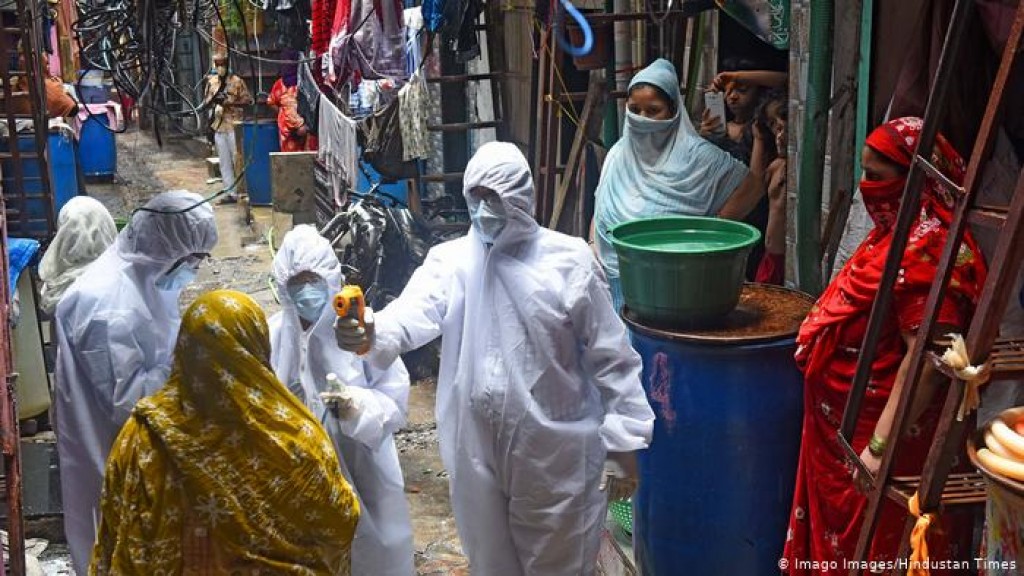
India's new COVID-19 cases stayed above 300,000 for a sixth consecutive day on Tuesday (Apr 27), while its armed forces pledged urgent medical aid to help battle the staggering spike in infections.
Over the past 24 hours, India recorded 323,144 new cases, below Monday's worldwide peak of 352,991, with overrun hospitals continuing to turn away patients due to a shortage of beds and oxygen supplies.
It reported 2,771 new deaths, but health experts believe the tally runs significantly higher.
"Please note that a huge fall in daily cases ... is largely due to a heavy fall in testing. This should not be taken as an indication of falling cases, rather a matter of missing out on too many positive cases!" Rijo M John, a professor and health economist at the Indian Institute of Management in the southern state of Kerala, said in a post on Twitter.
India has called on its armed forces to help tackle the devastating crisis. Chief of Defence Staff General Bipin Rawat said late on Monday that oxygen would be released from armed forces reserves and retired medical personnel would join health facilities that are struggling under the strain of cases.
Nations including Britain, Germany, and the United States have pledged aid, while Indian Americans in US Congress and the technology sector have joined forces to help.
A shipment of vital medical supplies from the United Kingdom, including 100 ventilators and 95 oxygen concentrators, arrived in Delhi early on Tuesday, Reuters partner ANI reported. France is also sending oxygen generators that can provide year-long oxygen for 250 beds, the embassy said.
The first "Oxygen Express" train for Delhi carrying around 70 tonnes of the life-saving gas also reached the national capital early Tuesday.
But the crisis in the metropolis of 20 million people is unabated.
Dr K Preetham, chief of medical administration at the city's Indian Spinal Injuries Centre which is treating scores of COVID-19 patients, said the scarcity of oxygen was such the hospital was splitting oxygen cylinders on patients.
"For seven days, most of us haven't slept. Because of the scarcity, we are forced to put two patients on one cylinder and this is a time consuming process because we don't have long tubes," he said.
 World
World  World
World  World
World  World
World