
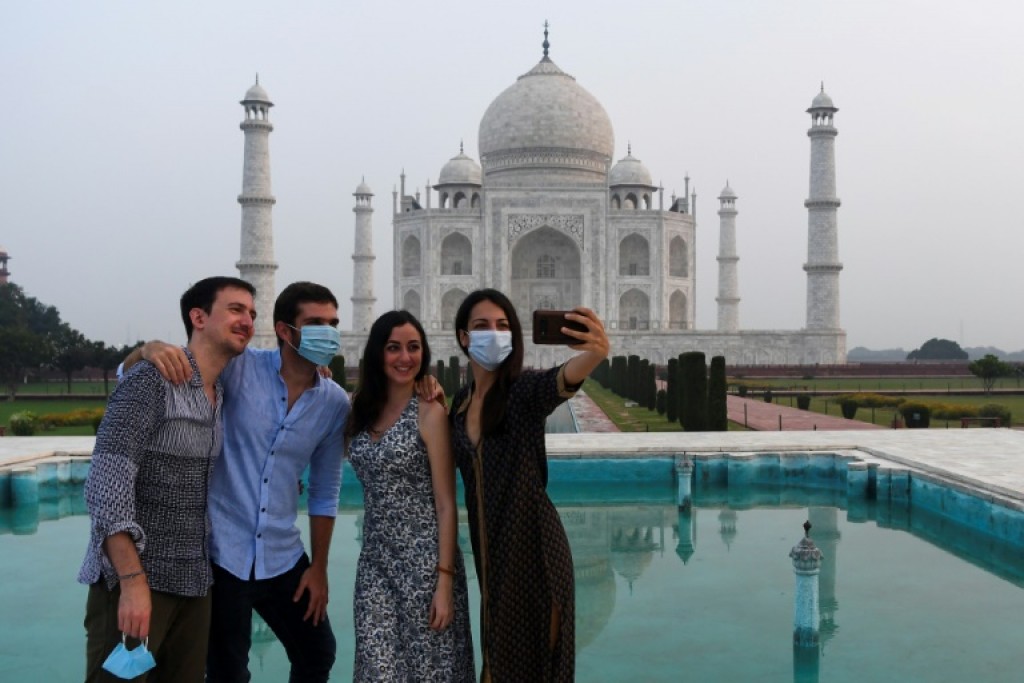
The Taj Mahal reopened to visitors on Monday (Sep 21) in a symbolic business-as-usual gesture, even as India looks set to overtake the US as the global leader in coronavirus infections.
India, home to 1.3 billion people and some of the world's most crowded cities, has recorded more than 5.4 million COVID-19 cases. About 100,000 new infections and more than 1,000 deaths are reported daily.
But after a strict lockdown in March that devastated the livelihoods of tens of millions of people, Prime Minister Narendra Modi is reluctant to copy some other nations and tighten the screw on activity again.
Instead in recent months his government has eased more and more restrictions including on many train routes, domestic flights, markets, restaurants – and now, visiting the Taj Mahal.
The world-famous white marble mausoleum in the city of Agra south of New Delhi is India's most popular tourist site. It usually draws 7 million visitors a year, but has been closed since March.
Officials said strict social distancing rules were in place and daily visitor numbers capped at 5,000 - a quarter the normal rate. Tickets can only be bought online.
"So many people lost their job during the lockdown. People have suffered a lot and it is time the country opens up fully," said bank official Ayub Sheikh, 35, visiting the Taj with his wife and baby daughter.
"We are not afraid of the virus. If it has to infect us, it will," Sheikh told AFP. "Not many people are dying now. I don't think it is going to go away soon. We have to get used to it now."
 World
World  World
World  World
World  World
World