
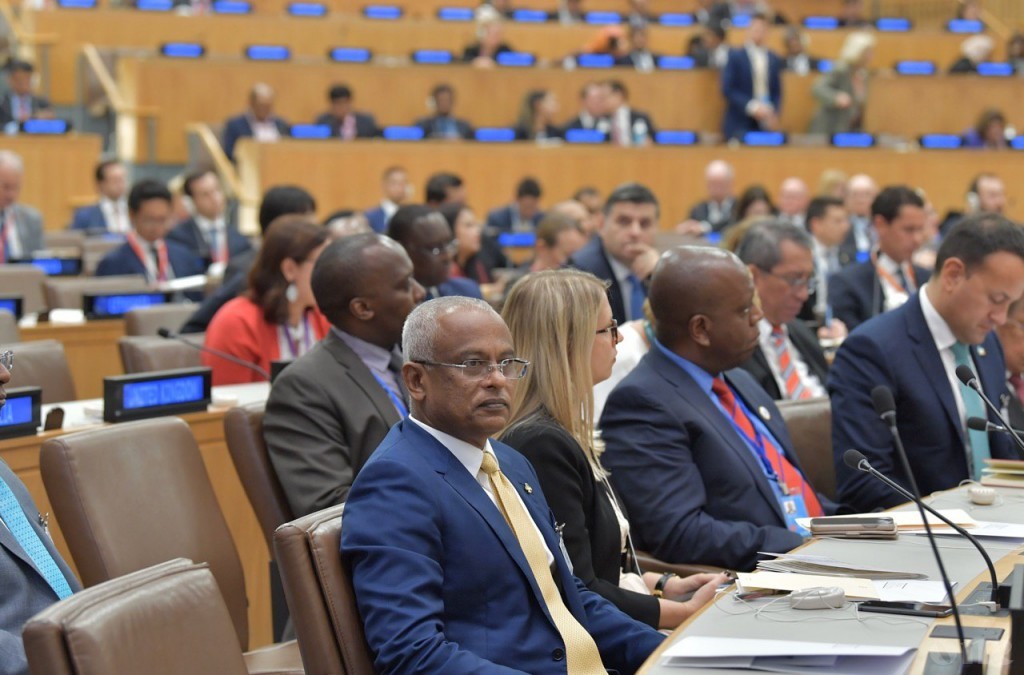
President Ibrahim Mohamed Solih has called to prevent the use of online platforms to spread terrorism and religious extremism.
The President made the remark at the “Leaders’ Dialogue: Strategic Responses to Terrorist and Violent Extremism”, held as part of the ongoing 74th Annual Session of the United Nations General Assembly (UNGA).
In his speech, the President assured the commitment from the Maldives to the Christchurch Call against the use of the internet for violent extremist and terrorist purposes.
Christchurch Call is an initiative jointly spearheaded by the Prime Minister of New Zealand, Jacinda Ardern and the President of France, Emmanuel Macron.
Named in honor of the victims of the terrorist attacks on Christchurch earlier this year, the Christchurch Call appeals to governments to work together with technology companies to halt the proliferation of extremist literature and content online which might inspire terrorist actions.
Speaking on the topic, President Solih outlined why he believes that conventional security measures are inadequate in the fight against terrorism, as they do not address the root socio-political causes that nourish extremism; racism, xenophobia and hate speech. He urged all governments to take steps to curtail them.
The President praised state efforts to work with technology companies to remove extremist content online, stating that the Maldives’ government will be implementing similar measures to ensure that the internet is not used as a platform to spread hate and encourage violence.
He also that the Maldives knows all too well the dire consequences of not addressing online hate-speech and highlighted that a Maldivian journalist, Ahmed Rilwan, was murdered by a local Al-Qaeda affiliated group after being subject to multiple death threats on social media.
To relay the proactive measures that the Maldives is taking at the national level to prevent and respond to terrorism, the President alluded to the proposed amendments to the Maldives’ Anti-Terrorism Act to strengthen the ability to halt terrorist activity while preserving the fundamental rights and freedoms granted by the Constitution.
President Mohamed Solih was joined at the conference by the King of Jordan, the President of France, the Prime Minister of New Zealand and the United Nations Secretary-General.
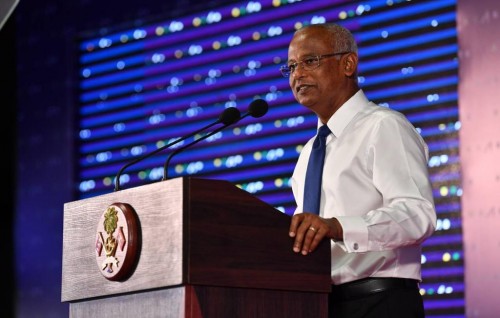 President Ibrahim Mohamed Solih
  President Ibrahim Mohamed Solih
  President Ibrahim Mohamed Solih
  President Ibrahim Mohamed Solih