

 Hussain Ali
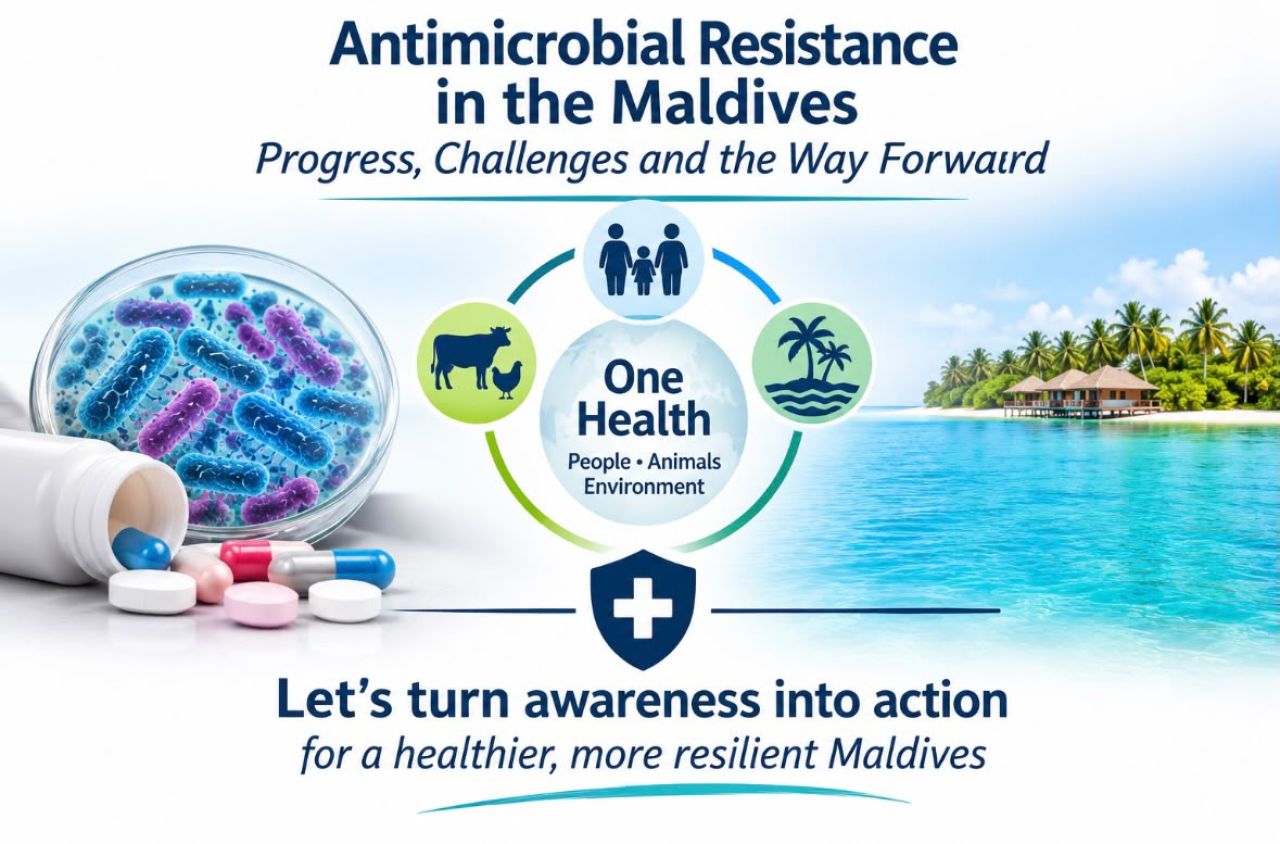
Antimicrobial resistance (AMR) occurs when infection-causing microorganisms, including bacteria, viruses, fungi, and parasites, no longer respond to antimicrobial medicines that were previously effective against them. As a result, these medicines become less effective or ineffective, making infections increasingly difficult and, in some cases, impossible to treat. This can lead to prolonged illness, increased healthcare costs, treatment failures, and a greater risk of severe disease and death.
AMR has emerged as one of the most significant global public health threats of the 21st century. As the focus has shifted from simply “bugs and drugs” to a broader perspective centred on “systems, sustainability and One Health, it is recognised as an interconnected issue involving healthcare, agriculture, economics, the environment, global trade, public behaviour, policy and health systems. Addressing AMR is becoming increasingly complex in today's interconnected world.
Since the first documented report of antimicrobial resistance in 1907, resistance has continued to evolve and spread at an alarming rate. According to global estimates, AMR was associated with nearly five million deaths in 2019, and if effective interventions are not implemented, annual deaths attributable to AMR could reach approximately ten million by 2050. This figure would mean that the total global death toll may exceed the total deaths caused by the COVID-19 pandemic, highlighting the urgent need for coordinated action across all sectors of society.
The growing emergence of multidrug-resistant (MDR) and extensively drug-resistant (XDR) bacteria is making infections increasingly difficult to treat and complicating efforts to accurately measure the true burden of AMR. Beyond its direct impact on health, AMR threatens progress across multiple Sustainable Development Goals (SDGs) by undermining healthcare systems, food security, and economic development. Despite widespread adoption of the WHO Global Action Plans (GAPs) and the National Action Plans (NAPs) at country levels, implementation has remained inconsistent. Persistent data gaps, surveillance limitations, limited funding, inadequate accountability mechanisms, and insufficient cross-sector collaboration and research challenges continue to hinder effective AMR governance. There is a need for a robust evidence-based framework to guide policy and action. with many countries facing challenges related to. These challenges are particularly evident in low- and middle-income countries, where constraints in infrastructure, surveillance capacity, and One Health integration continue to hinder progress. Recognizing these gaps, the emphasis should be on strengthening AMR governance through evidence-based approaches that translate policy into action, improve cross-sectorial collaboration, and support the effective implementation of interventions to reduce the burden of AMR globally.
AMR is an emerging concern in the Maldives as well. Local studies have identified resistant bacteria in healthcare settings, particularly among organisms responsible for bloodstream infections, highlighting the need for continued monitoring of resistance patterns and infection trends. Beyond human healthcare, the misuse and overuse of antibiotics in food-producing animals has become an important contributor to AMR worldwide. This is particularly relevant for poultry, one of the most widely consumed sources of protein in the Maldives. The heavy reliance on imported poultry, combined with limited laboratory capacity and the absence of routine foodborne AMR surveillance, increases the risk of resistant pathogens being introduced and spread within the country.
A study conducted here in 2022 found antibiotic-resistant Escherichia coli (E. coli) in imported frozen chicken products. The bacteria showed high levels of resistance to commonly used antibiotics, including tetracycline, ciprofloxacin, and ceftriaxone, with many isolates exhibiting multidrug resistance. These findings suggest that food products may serve as a pathway for resistant bacteria to enter the community. Although the study has many limitations, it provides an important early warning and highlights the need for stronger monitoring systems, improved laboratory testing, and closer integration of food safety measures into the national AMR response.
Despite these challenges, there are encouraging signs. A multinational study assessing the antimicrobial susceptibility of community-acquired pathogenic Escherichia coli (E. coli) across low-, middle-, and high-income countries found that the Maldives demonstrated relatively high susceptibility rates despite being a middle-income country. These findings suggest that factors beyond income level, particularly strong public health infrastructures such as higher health literacy, improved water, sanitation and hygiene (WASH) standards, better access to healthcare services, and high vaccination coverage, can significantly influence AMR outcomes. While continued vigilance and investment are essential, these findings indicate that the Maldives possesses several foundational strengths that can support future AMR prevention and control efforts.
Maldives has already demonstrated a strong commitment to addressing AMR through the implementation of its NAPs which aligns with the WHO GAPs on AMR. The national strategy envisions a sustainable and coordinated approach to AMR containment by 2029, supported by digital surveillance systems and a One Health framework.
A national governance structure bringing together government ministries, regulatory authorities, healthcare institutions, academia, non-governmental organizations, and international partners, is already in place. Technical subcommittees oversee priority areas and promote cross-sectoral collaboration. Efforts such as antimicrobial stewardship programmes, infection prevention and control (IPC) initiatives, AMR education within professional training curricula, and continuing education for healthcare workers are already underway.
On the regulatory front, important measures have been introduced to safeguard antimicrobial use and quality. These include mandatory Good Manufacturing Practice (GMP) audits, pharmacovigilance and post-marketing surveillance (PMS) programmes, measures to maintain the availability of essential antimicrobials, restrictions on Over the Counter (OTC) antimicrobial sales, and regulatory controls on the use of antimicrobials as animal growth promoters and feed additives.
Public awareness also remains a key pillar of the national strategy. Regular awareness campaigns, including activities during World AMR Awareness Week, are being implemented, alongside periodic Knowledge, Attitudes and Practices (KAP) surveys to assess public awareness and the impact of these interventions.
Research has also been identified as a national priority, particularly studies examining AMR across human, animal, and environmental health sectors. However, achieving meaningful progress will require dedicated funding, stronger research infrastructure, and continued investment in innovative technologies and surveillance systems. Strengthening these areas will be crucial for generating the evidence needed to guide future policy and intervention strategies in the Maldives.
While this vision and structure provides clear strategic direction, no Specific, Measurable, Achievable, Relevant, and Time-bound (SMART) targets have been set to facilitate monitoring and evaluation of progress. Capacity gaps remain, particularly in microbiology, infectious diseases, veterinary AMR, and broader One Health expertise. Expanding specialized training opportunities in these areas will be essential to strengthen the national response.
Recent assessments AMR preparedness in low- and middle-income countries, including the Maldives, have highlighted several areas that require further strengthening. Many of the objectives remain broad and aspirational. The absence of clearly defined, measurable targets, coupled with limited country-specific AMR data, may constrain the development of evidence-based antimicrobial stewardship interventions and rational prescribing policies. Another key challenge lies in fully operationalizing the One Health approach. Although the concept is recognised within national strategies, meaningful engagement of the environmental and agricultural sectors remains limited, making cross-sectoral implementation difficult.
Recent reviews of AMR governance show that, despite the development of increasingly comprehensive policies and national action plans, a significant gap remains between policy design and real-world implementation. In the Maldives, for example, only a limited portion of the commitments outlined in the first National Action Plan has been fully realised, largely due to constraints in institutional capacity and insufficient integration across sectors. These findings suggest that policy frameworks alone are not enough to address the complex and interconnected nature of AMR. Effective AMR control requires stronger multi-sectorial collaboration, as well as strategies tailored to local contexts and resource limitations. Increasingly, experts advocate for the use of implementation science, which focuses on translating evidence-based interventions into practical, sustainable actions within real-world settings. By emphasising community engagement, local health system capacities, behavioural factors, and the One Health approach, implementation science offers a pathway to strengthen AMR governance and improve the uptake and effectiveness of interventions across sectors. Alongside, continued investment in surveillance, research, cross-sectoral collaboration, workforce development, and sustainable financing will be necessary to strengthen the Maldives' capacity to prevent and contain antimicrobial resistance in the years ahead.
As a nation that depends heavily on imported food, the Maldives faces unique challenges in addressing foodborne antimicrobial resistance. Strengthening surveillance at points of entry, investing in diagnostic capacity, and adopting a One Health approach will be critical to protecting public health and national health security in the years to come. As an island nation, the Maldives must also consider the marine environment as a potential reservoir and transmission pathway for AMR genes. Resistant microorganisms and antibiotic residues can enter coastal waters through human activities, creating opportunities for the spread of resistance within aquatic ecosystems.
Given the growing threat of antimicrobial resistance, alongside coordinated One Health approach, Maldives should focus on strengthening antimicrobial stewardship programs in healthcare facilities, improving surveillance of resistant microorganisms, enforcing prescription-only access to antibiotics, and enhancing infection prevention and control measures as critical priorities. High priority needs to be given to the establishment and maintenance of a well-functioning and sustainable medicine disposal system, particularly for antimicrobials. Public awareness campaigns should promote responsible use and disposal of antimicrobials, while healthcare professionals should receive ongoing training on evidence-based prescribing practices. As an island nation, Maldives should also invest in monitoring antibiotic residues and resistance genes in marine and wastewater environments. Increased support for local research and regional collaboration can further inform policies and help safeguard the effectiveness of antimicrobials for future generations. Let’s bring our efforts together to tackle AMR in the Maldives.
The time to act against the AMR is now. The fight against AMR is a shared responsibility. Together through coordinated action, sustained investment, and a One Health approach, we can turn our awareness into action and build a more resilient and healthier future for Maldives.
-Dr. Bhawana Khakurel
PharmD, MSc in Infectious Diseases and One Health
Clinical Pharmacologist, State Pharmaceuticals and Medical Supply Corporation





ކޮމެންޓް