
 Hussain Ali
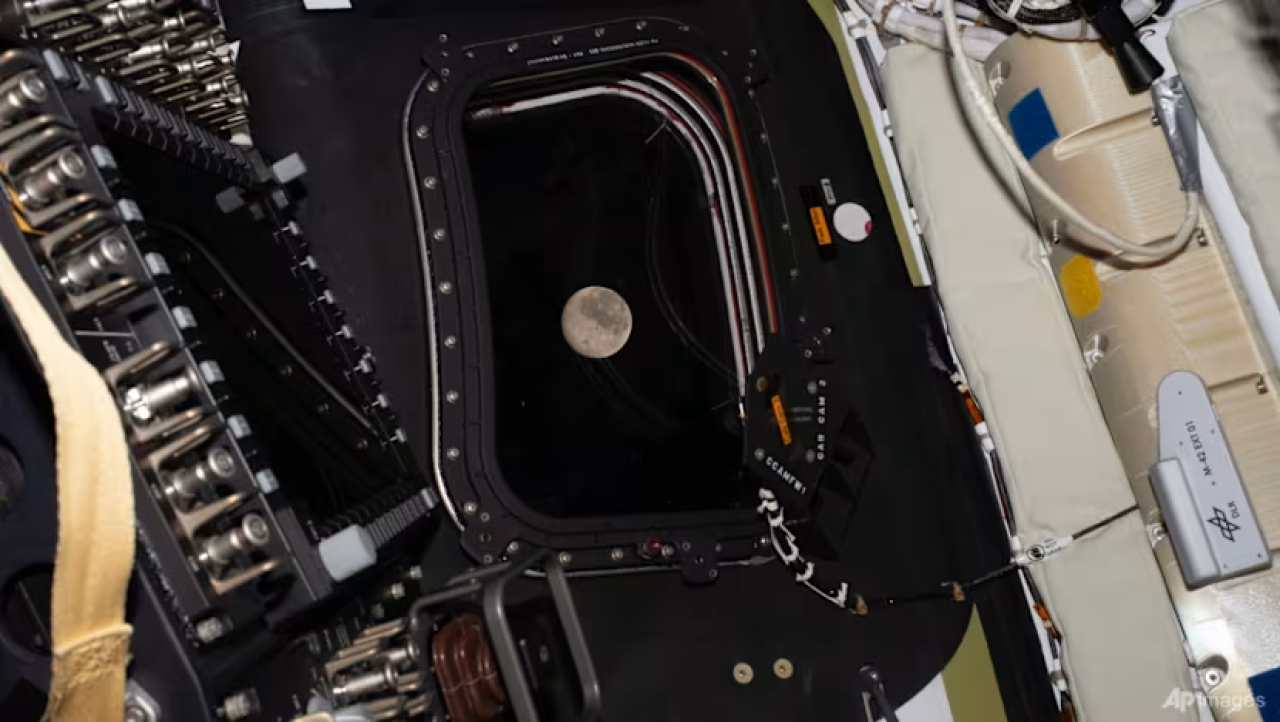
The four astronauts of NASA's Artemis II mission cruised on Monday (Apr 6) to the deepest point in space reached by any human, following the tug of lunar gravitational force en route to a rare crewed flyby over the perpetually shadowed far side of the moon.
As the climactic six-hour flyby of Earth's only natural satellite got underway, some two dozen lunar scientists packed a room adjacent to mission control at NASA's Johnson Space Center in Houston to record the astronauts' first observations of the moon's surface in real time.
The Artemis II crew, riding in their Orion capsule since launching from Florida last week, began their sixth day of spaceflight as they awoke at around 10.50am ET to a recorded message from the late NASA astronaut Jim Lovell, who flew aboard the Cold War-era Apollo 8 and Apollo 13 moon missions.
"Welcome to my old neighbourhood," said Lovell, who died last year at age 97. "It's a historic day, and I know how busy you'll be, but don't forget to enjoy the view ... good luck and Godspeed."
The four Artemis astronauts set a new spaceflight record on Monday as they exceeded the maximum 400,000km distance from Earth reached in 1970 by Apollo 13 after a nearly catastrophic spacecraft malfunction cut short that mission, forcing Lovell and his two crewmates to use the moon's gravity to help return them safely to Earth.
Later on Monday, the Artemis crew of US astronauts Reid Wiseman, Victor Glover and Christina Koch and Canadian astronaut Jeremy Hansen were due to reach their own farthest distance from Earth - 406,769km, around 6,626km beyond the record held by the Apollo 13 crew for 56 years.
 News
News  News
News  News
News  News
News